
Papr Launches Papr Work to Replace Fragmented GTM Software With AI Apps That Run the Work
Papr Work is a local-first app where AI-native professionals discover, customize and build AI apps that automate repetitive GTM work and cut SaaS costs.
Amir Kabbara
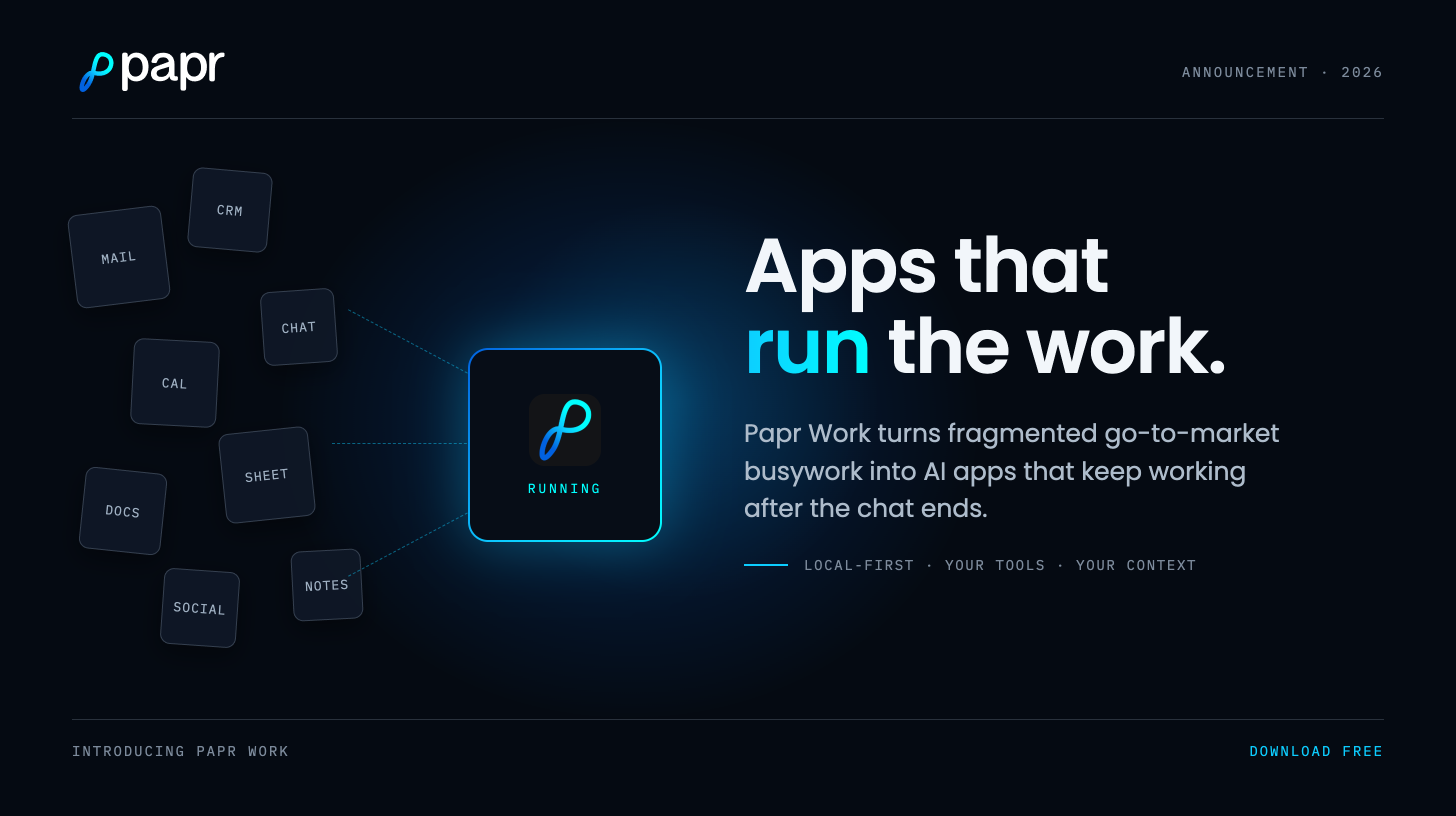
Papr today announced the launch of Papr Work, a local-first application that helps AI-native professionals at small and midsize businesses replace repetitive B2B go-to-market workflows with customizable AI-powered apps.
Built for founders, marketers, account managers, and independent professionals who already use AI in their daily work, Papr Work helps users automate the repetitive coordination between Gmail, Slack, Calendar, CRM systems, LinkedIn, documents, spreadsheets, and other GTM tools.
Instead of adding another point solution to an already fragmented software stack, users can start with community-built apps, customize them through natural language, or create new apps by describing the workflow they want to automate. Each app can connect to existing tools, manage business information, execute recurring processes, and retain context about the business over time.
By shifting workflows from multiple narrow SaaS products into customizable apps, Papr Work helps users reduce software costs while also lowering AI costs through persistent memory that reduces repeated processing and unnecessary token usage.
Key capabilities include:
Community-built app library: Start with ready-made apps designed for common GTM workflows
Chat-based customization: Modify apps by describing changes in natural language instead of rebuilding workflows manually
AI app creation: Create new apps by explaining the workflow, tools, and desired outcome
Workflow execution: Apps connect systems, update records, run recurring processes, and deliver outputs
Persistent business context: Apps remember relevant customer, company, and workflow information over time, reducing repeated AI processing
AI provider flexibility: Use preferred AI models while maintaining shared context across applications
Local-first control: Keep data, credentials, memory, and app execution under user control
“People adopted AI to move faster, but many are still the integration layer between all their tools,” said Amir Kabbara, founder of Papr. “Papr Work gives them a way to turn the workflows they already understand into apps that run. Start with an app, customize it for your business, and let it handle the repetitive work while reducing the cost of the software and intelligence behind it.”
From AI Assistance to Apps That Run GTM Work
Millions of professionals use conversational AI to write, research, summarize, and analyze. But after the conversation ends, they still have to copy information between systems, re-explain context, update records, and coordinate the next steps themselves.
Papr Work turns AI conversations into persistent applications that continue working after the chat ends. Users can describe a repeatable workflow, and Papr Work creates or modifies an app that can:
Connect to APIs and existing business tools
Manage customer and business data
Automate recurring GTM workflows
Create dashboards and workflow interfaces
Maintain context across sessions and applications
Execute tasks based on user-defined processes
“If you have used ChatGPT or Claude, you already understand the interface,” Kabbara said. “The difference is that Papr Work turns that conversation into an app that keeps working after the chat ends.”
Unlike traditional AI assistants, Papr Work apps are designed for professionals who want leverage from AI without building software. Users describe how they work, and Papr Work helps turn those repeatable processes into applications.
Users can also choose the AI provider that best fits each workflow while maintaining a shared context layer across their apps. Because apps retain relevant business knowledge, they avoid repeatedly sending the same background information, instructions, and documents to AI models, reducing token consumption and AI operating costs.
Replace Repetitive GTM Work With Customizable Apps
Papr Work is initially focused on AI-native professionals who spend their days managing sales, marketing, and customer workflows. These users already rely on AI tools but still spend significant time moving information between systems, preparing meetings, updating CRMs, researching prospects, and coordinating follow-up.
Community-built apps provide a faster starting point than building workflows from scratch. Users can install an app, adapt it through chat, or use it as a foundation for creating something specific to their business. Examples include:
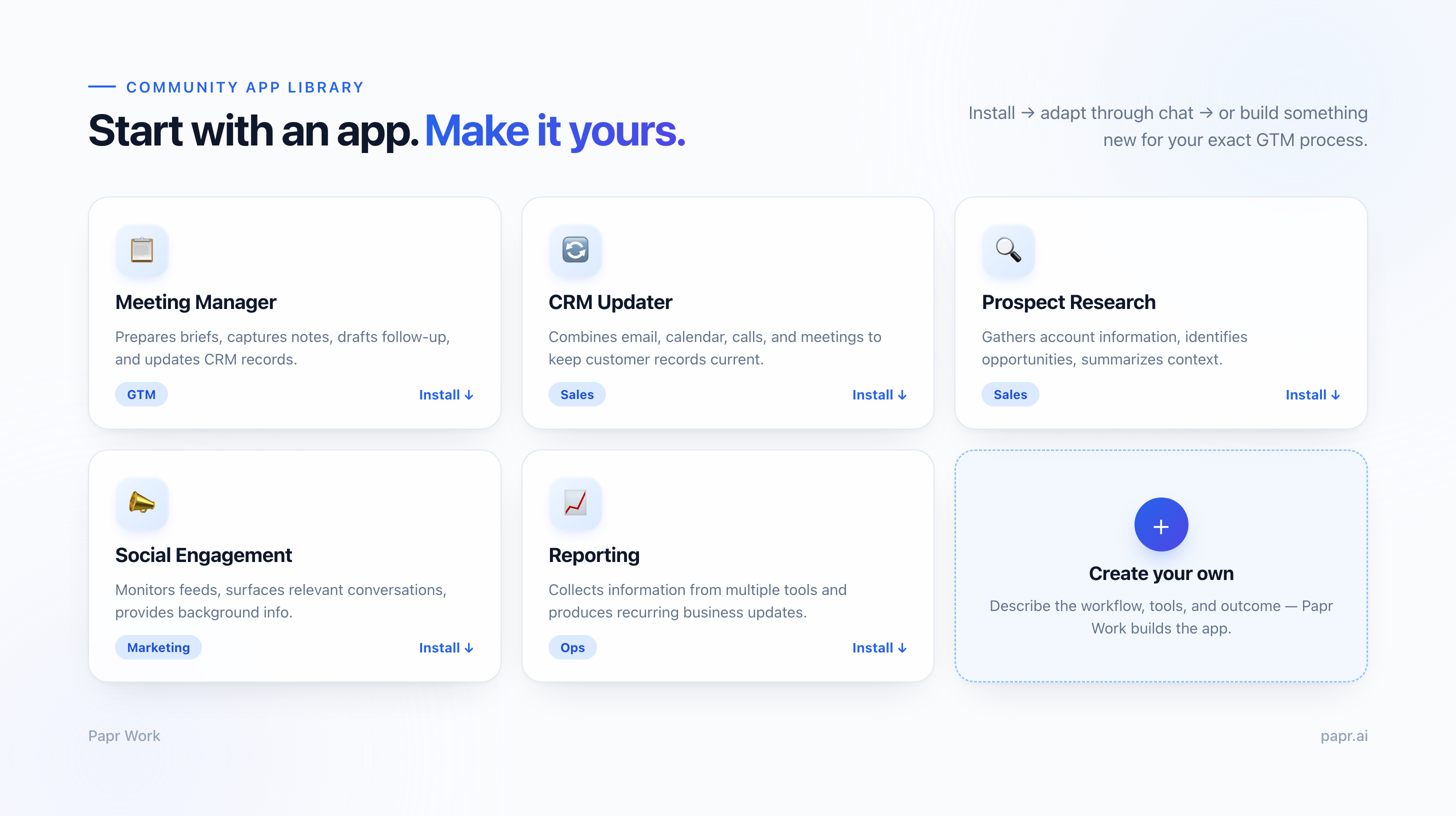
Users can run an app as provided, customize its behavior, connect additional data sources, or create a new workflow around a specific GTM process.
“I had ChatGPT, Notion, automation tools, and several GTM subscriptions, but I was still the one holding the workflow together,” said Corey Badcock, a solo consultant and early Papr Work user. “With Papr Work, I started with apps for the jobs I needed done and adapted them to how I operate. Meeting preparation, notes, CRM updates, and follow-up now happen through one system instead of several disconnected tools.”
By replacing repetitive coordination and reducing reliance on narrow software subscriptions, Papr Work helps professionals save time, reduce SaaS overhead, lower AI processing costs, and increase output without adding headcount.
Apps That Already Understand the Business
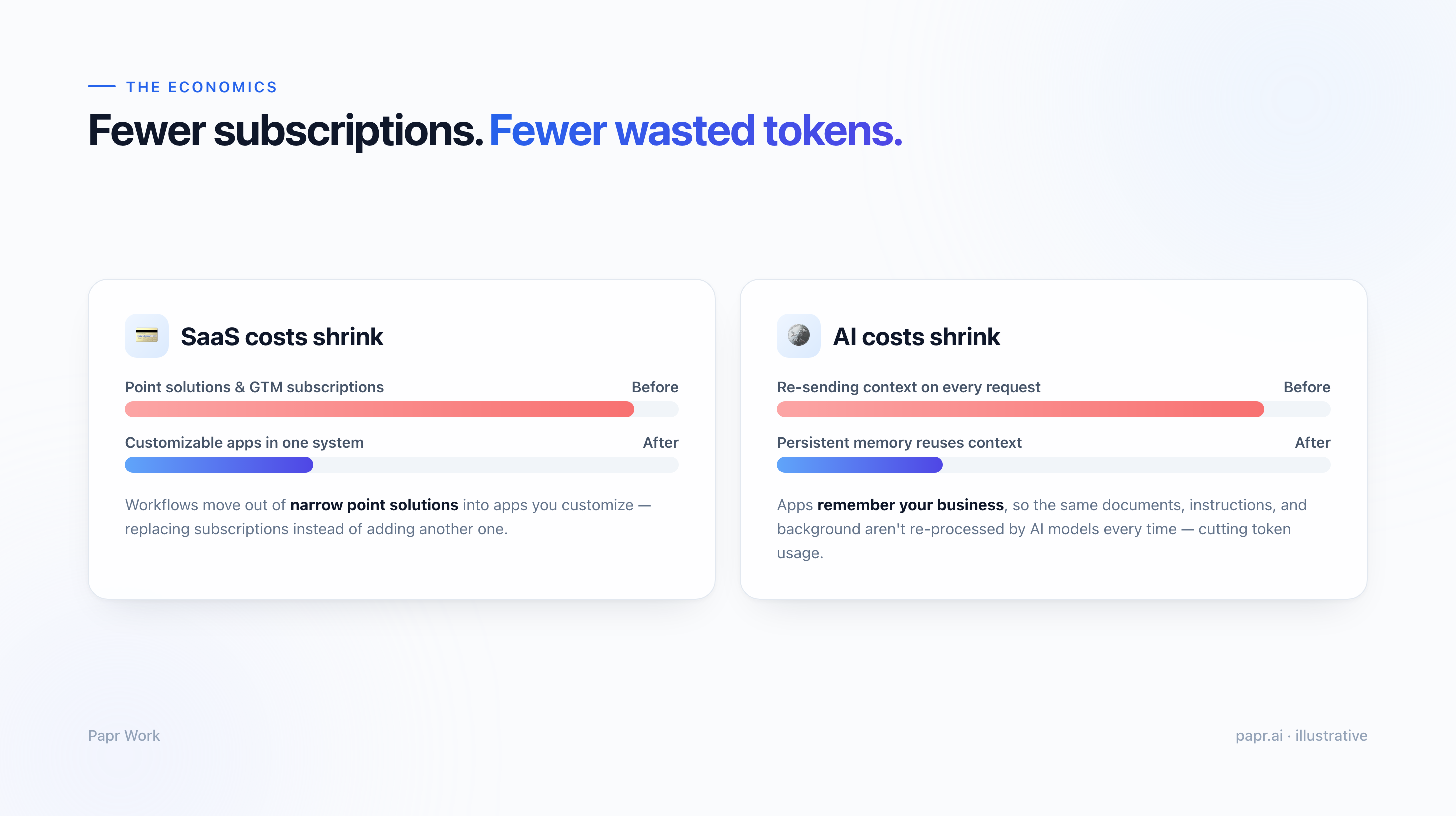
Papr Work gives apps persistent business context so they do not need to relearn the same information every time they run. Apps can retain customer history, company preferences, terminology, decisions, and prior work, then share relevant context across workflows.
This allows apps to become more useful over time. A meeting app can understand previous conversations, a CRM app can recognize customer history, and a prospecting app can incorporate existing business knowledge before starting research.
Persistent context also reduces unnecessary AI processing. Instead of repeatedly sending the same documents, instructions, and business background to AI models, Papr Work reuses the context it has already built. This reduces token usage, lowers AI costs, and allows users to get more value from the models they already use.
“Memory should do more than make an assistant feel familiar,” Kabbara said. “It should make every app more useful and reduce how much intelligence customers need to buy. Your apps should already understand your business before they begin the next job.”
Local-First Memory and Controlled Execution
AI apps need business context, but they should not require broad access to sensitive information.
Papr Work runs locally by default and uses a persistent memory layer to give each app only the context needed for its workflow. This reduces unnecessary data sharing while allowing apps to retain useful business knowledge over time.
“Businesses should not have to choose between useful AI and control of their information,” Kabbara said. “Papr Work gives apps the context they need without exposing everything the business knows.”
Core safeguards include:
Local-first execution: Data and credentials stay on the user’s device by default
Permission-aware memory: Apps access only approved context and tools
Selective sharing: Only relevant context is sent to the chosen AI provider
Visible activity: Users can inspect what information apps used and what actions they took
Context controls: Users can review, update, expire, or remove stored information
Provider independence: Users can switch AI providers without rebuilding or duplicating their business memory
This architecture helps apps understand the business while limiting unnecessary data movement and exposure. As AI moves from answering questions to executing workflows, Papr believes memory, permissions, and visibility must be built into the system rather than added after deployment.
Availability
Papr Work is available starting today and can be downloaded for free.
About Papr
The model knows the world. Papr knows your business. Papr gives AI applications persistent, permission-aware context about the businesses and people they serve, helping them work more safely, efficiently, and effectively across models and workflows.
Questions
What is Papr Work?
A local-first desktop app where AI apps run repetitive go-to-market work across Gmail, Slack, Calendar, CRMs and LinkedIn.
Who is Papr Work for?
Founders, marketers, account managers and independent professionals at small and midsize businesses.
Do I need to build apps myself?
No. You can run ready-made apps as they are, customize them, or describe a new one in chat.